
PITCHBLACKNIGHT
PITCHBLACKNIGHT
MIKEL ROSENTHAL · FLUXUS ARTIST · STILL MAKING
"First take. No blueprint. No rehearsal. The imperfection is the craft — the breath of the moment, not the sterility of infinite takes."Mikel Rosenthal
01 — MUSIC
Eighteen years of improvisation, recorded live in single takes. No overdubs. No reconstruction. Each track documents a moment that cannot be repeated. A session could run ninety minutes — and a single imprecision near the end was enough to discard all of it. There are hundreds of recordings that have never been heard by anyone. This is what made it through. What you hear is what happened, once, and only once, imperfections and all.
Select a track
Live improvisation · Single take · Unrepeatable
The first mixes PBK ever made — recorded and released between 2013 and 2014. Long-form DJ sets, full ideas, unfiltered. Most people have never heard any of this.
01 — MANIFESTO
Every discipline is a different lens on the same question.
Design. Music. Art. Voice. Movement. Philosophy.
When something catches me, I go all the way in.
Fluxus is the closest word for what that produces.
Not a style. A way of investigating.
The edges keep moving. That's how you know you're still in it.
The practice started in 1990 — a Mac in a high school computer lab, Photoshop 1.0, before digital art had a language. Thirty-six years across every discipline, most of it unseen. One imprecision was enough to discard ninety minutes of music. Hundreds of recordings, never heard. Then something changed at the foundation: body, chemistry, how the present tense actually feels. Twenty-five years medicated, done. Thirty-five pounds gone. A clarity I don't have a better word for than awake. Revelations keep arriving. This site is what the opening looks like.
Still going.
ORIGIN
The school's first Mac arrived freshman year — and with it, Photoshop 1.0, days after its release. Before the internet was visual. Before digital art had a culture or a community of practice. Most people wouldn't encounter these tools for another decade. That's where it started. Not late. Not early. At the exact beginning.
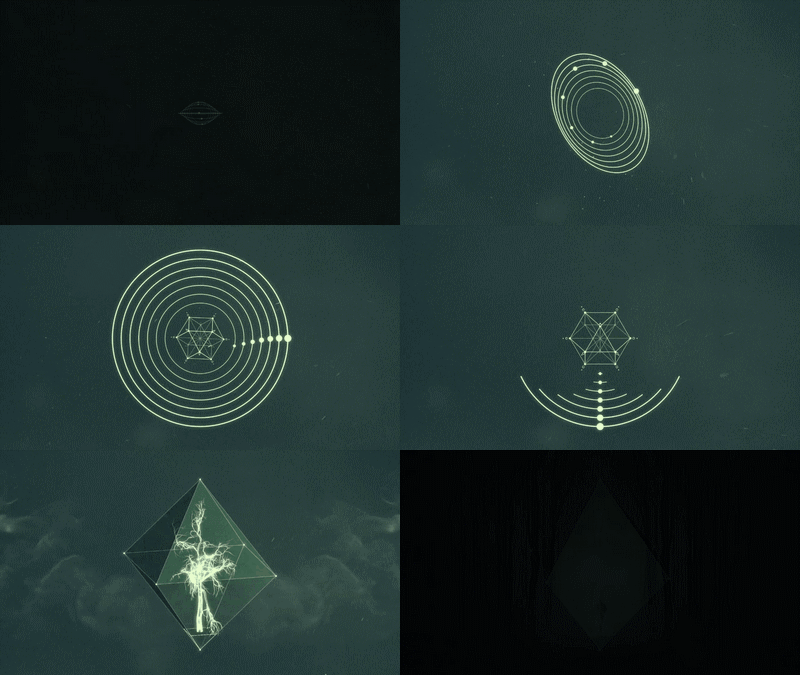
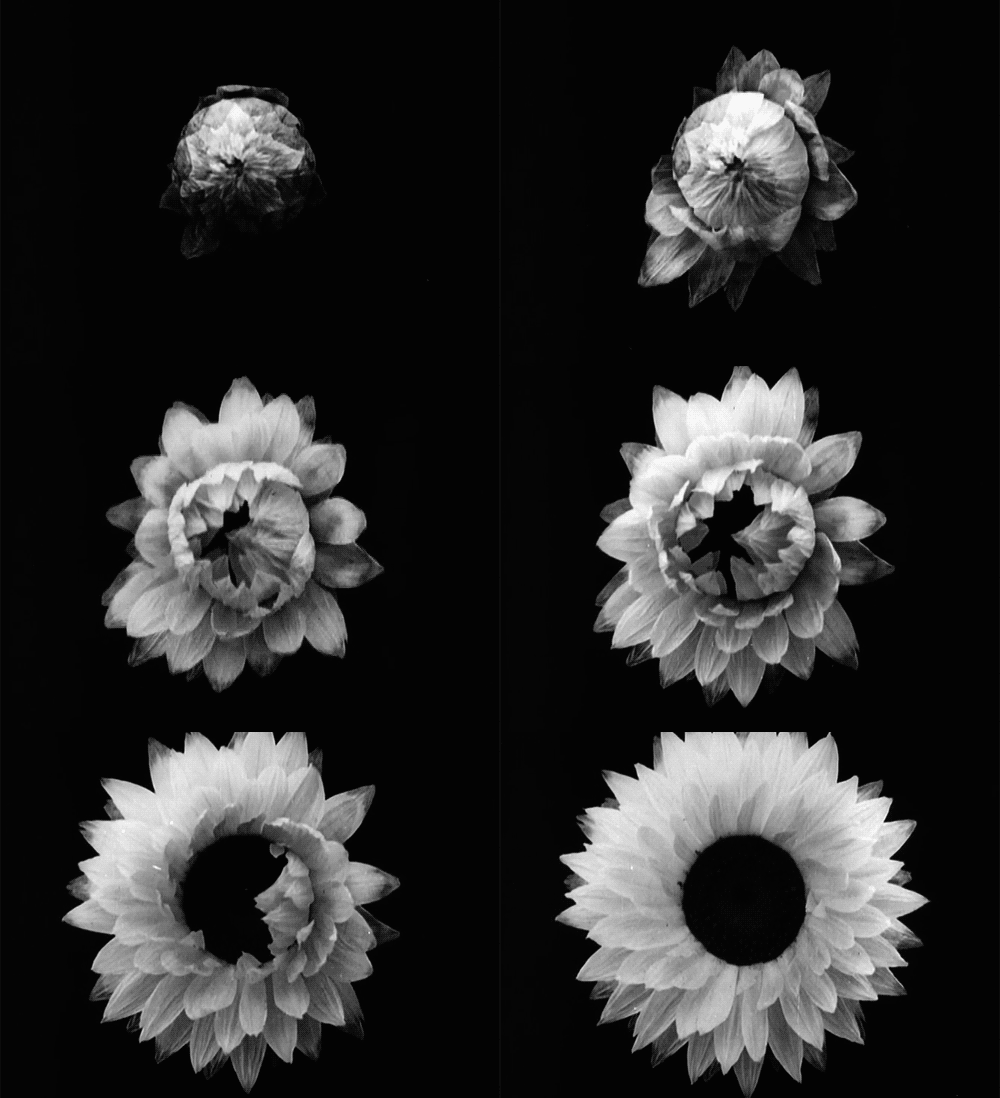
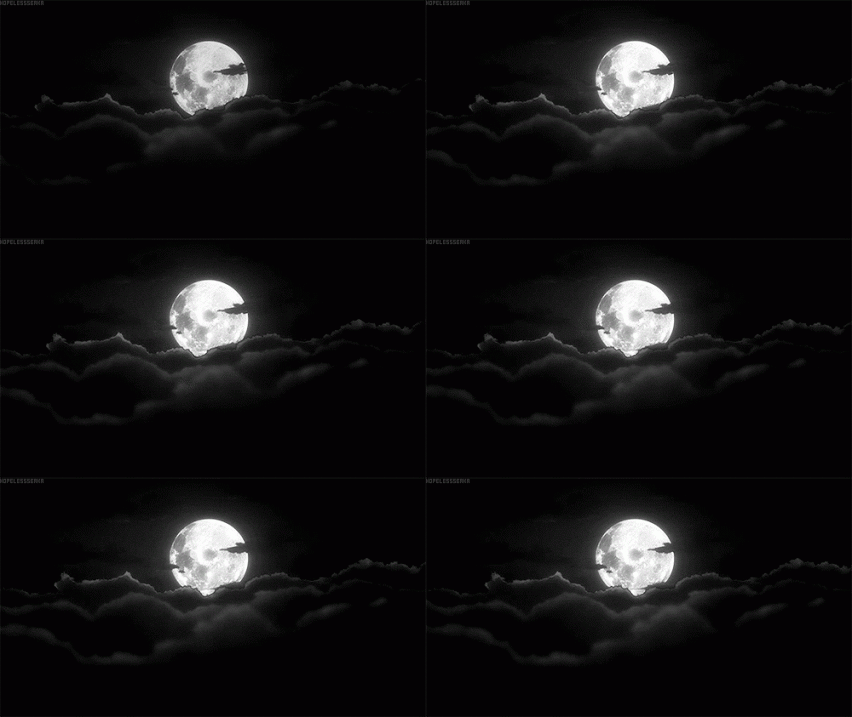
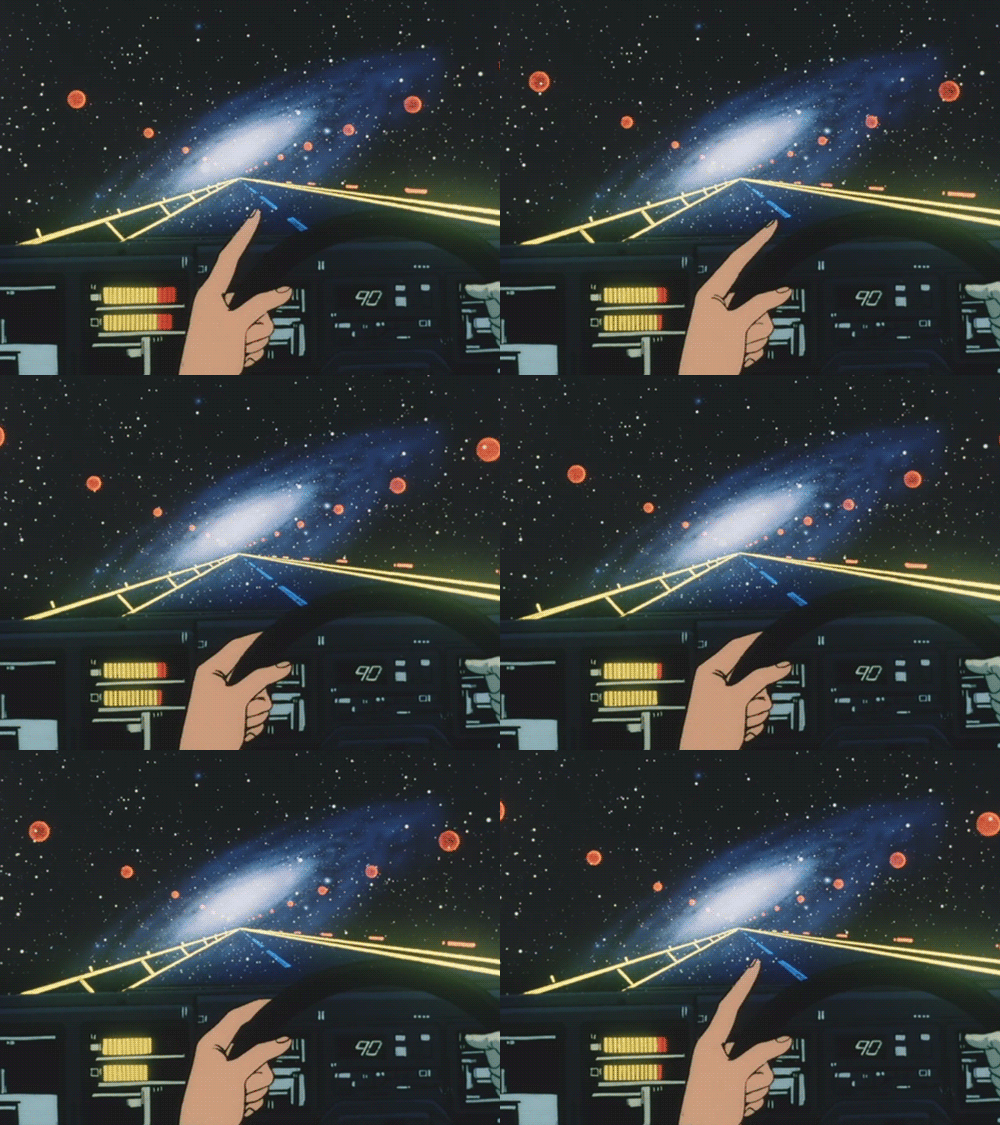
Electronic Arts & Design. Two years out of college, the animated GIF work began — generative, algorithmic, hand-crafted. 156 survive and are shown here. More exist in the archive. The earliest nearly didn't make it: lost in an incident involving an exterminator, a can of bug spray, and a stack of discs laid face-up on cheap carpet. The exterminator had one job.
A career building design systems for GE Healthcare, BCBS, Avant, TransUnion — systems used by 500,000+ people, recognized by the Red Dot, Fast Company, and dmi:DVA. Running alongside it, invisible: eighteen years of improvised music recorded in single takes and mostly destroyed. 156 GIF works accumulating quietly. Two complete bodies of work, almost entirely unseen.
A session could run ninety minutes. A single imprecision near the end was enough to discard all of it. Not laziness. Not doubt in the work. Something closer to reverence — and something that looked, from the outside, an awful lot like fear. The standard was real. So was the silence it imposed.
Off medication. Thirty-five pounds gone. A clarity arriving in waves, each one larger than the last. It felt like waking from a coma — because it was. The work is the same work it has always been. The willingness to share it is new. The revelations keep arriving faster than they can be catalogued. This site is what the opening looks like. Still figuring it out. Still going.
Over twenty years designing systems that have to hold — clinical tools, fintech products, insurance platforms, enterprise frameworks. Edison for GE Healthcare (Red Dot Award · Fast Company Innovation by Design · dmi:DVA). Pathfinder for Avant. FIBER for BCBS. Alongside the professional work: eighteen years of improvised music, 156 digital artworks, voice performance, and a Fluxus practice that ties all of it together.

03 — SERVICES
05 — DIGITAL ART
The practice started in a high school computer lab in 1990 — the school's first Mac, Photoshop 1.0, days after its release. Before the internet was visual. Before digital art had a name. The animated loops began after college, in 1999. 156 of them are here. There are more in the archive — this is the curated set. The earliest nearly didn't survive: lost in an incident involving an exterminator, a can of bug spray, and a stack of discs laid face-up on cheap carpet. The exterminator had one job. Each work started as a question about what a single form could do, and kept going until it answered.
07 — DAILY WISDOM
08 — CONTACT